


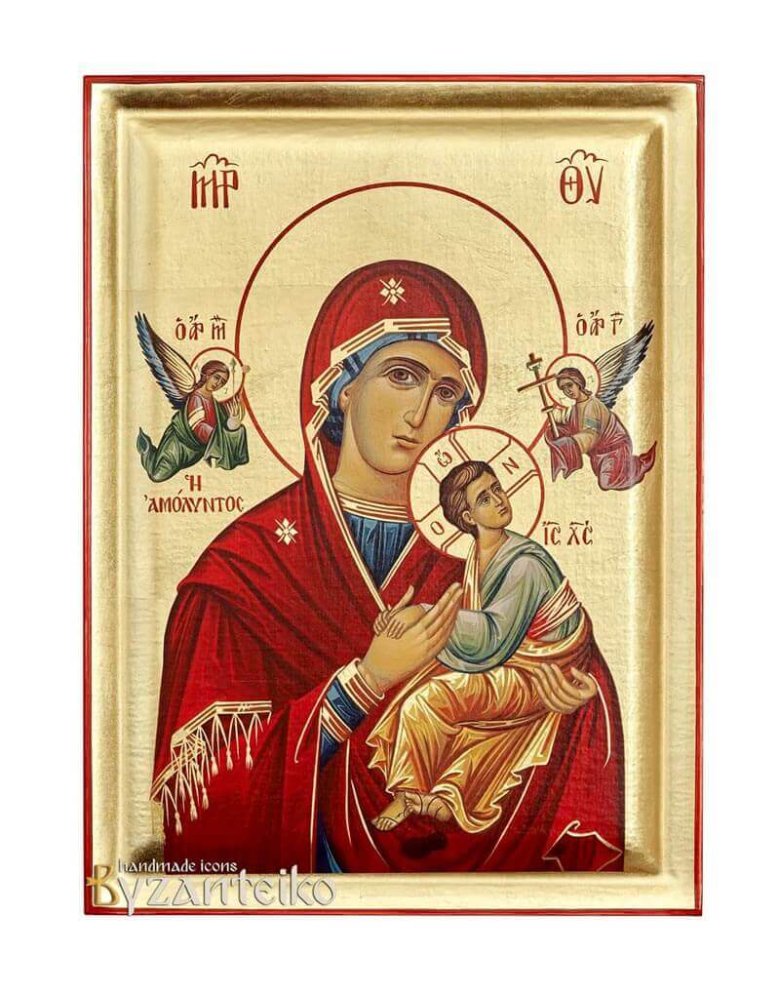


The Panagia Amolyntos, also known as the Virgin of the Passion, is presented in a unique, handmade engraved icon, created using silkscreen printing on gilded canvas.
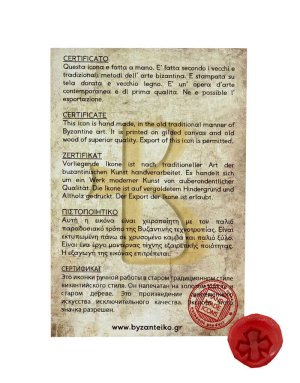
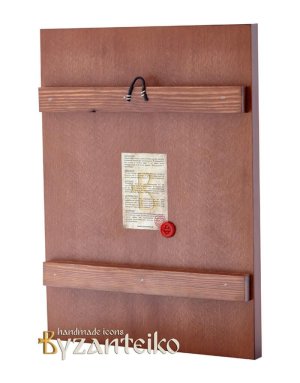
Each icon is accompanied on the back by a certificate of authenticity, sealed with traditional sealing wax, adding a distinctive touch of authenticity and character.
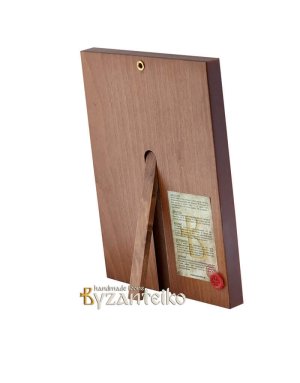
The icon features a special opening on the back, allowing for easy hanging on the wall.
The name Amolyntos comes from the hymn of the Compline service, “Aspile, Amolynte, Ahrante…” — “Immaculate, undefiled, spotless…”
In Orthodox iconography, this representation is also known as the Virgin of the Passion. The Virgin Mary is depicted holding Christ in her arms, while two Angels appear on either side of her, holding the symbols of the Passion of Christ: the Cross, the Lance and the Sponge.
The presence of these symbols gives the icon a deeply moving and profound spiritual meaning. The Infant Christ turns towards the Angels, while the Virgin holds Him with tenderness and love, foreshadowing His Passion and sacrifice.
The Virgin Mary holds a unique place in the hearts and spiritual life of Orthodox Christians. She is revered as the Mother, Protector and Comforter, the figure to whom the faithful turn in both moments of joy and times of difficulty.
Her image can be found in homes, churches, monasteries and chapels, always close to the lives of the faithful. Her name is invoked in prayers, supplications and hymns of praise, as believers seek her protection, help and intercession.
The Panagia Amolyntos or Virgin of the Passion is an icon of profound spiritual and symbolic significance, making it a meaningful presence in the home and a timeless and deeply symbolic gift for someone dear.
Aspile, Amolynte, Ahrante, Parthene,
Theonymphe Despoina,
the Theon Logon anthropois ti paradoxo sou kyisei,
enosasa kai tin ton anthropon apostasasan physin,
tois ouraniois synapsasa,
i ton apelpisμένων moni elpis,
kai ton polemoumenon voitheia,
i etoimi antilepsis ton eis se protrechonton,
kai panton ton Christianon to katafygion.
Return to the excavated images. Follow us: Facebook Instagram


